
Do carpenter bee traps actually work?
In short: Yes, but they aren't a "set it and forget it" miracle.
The Mechanism: A carpenter bee trap typically consists of a wooden block with holes pre-drilled at an upward angle, leading into a clear plastic or glass jar. The bees are drawn to the pre-existing holes (because they are lazy and prefer a pre-started tunnel). Once they enter, they follow the light toward the jar and become trapped.
Key Tip: For these to be effective, you need to hang them in the sunny spots where you’ve seen bee activity. If you have active holes in your house, the bees will ignore the trap. You have to repair the house first (more on that in a second) to make the trap the most attractive option on the block.
Can you scare a bee away?
It sounds like a tall tale, but visual deterrents can be surprisingly effective for carpenter bee treatment. Carpenter bees are territorial, and they have natural predators.
- Fake Hornet Nests: Carpenter bees are terrified of hornets (which will eat them). Hanging a "decoy" hornet nest (you can buy these or even use a stuffed brown paper bag) near your eaves can convince a bee that the neighborhood is too dangerous for a nursery.
- Dragonfly Wingmen: These are small, realistic dragonfly decoys on clips or stakes. Since dragonflies are the fighter jets of the insect world and frequently snack on bees, seeing a "Dragonfly Wingman" hovering near your deck can be enough to send a carpenter bee packing. (Yes, we know it sounds a bit like yard art, but the biology checks out).
What should you do after the damage is done?
If you already have holes, simply plugging them with caulk isn't enough. In fact, if you trap a female bee inside with just a bit of putty, she will often just drill a new hole to get out, doubling your damage. You need to perform what we call "Field Surgery."
Step-by-Step Repair:
- Treat the hole: Use a pesticide specifically labeled for bees or stinging insects (a dust or a targeted spray). This ensures that any larvae or active females inside are neutralized.
- Wait: Give the treatment a day or two to work.
- The Wood Dowel Method: Instead of just using wood filler (which can shrink and fall out), find a wooden dowel that matches the diameter of the hole (usually 1/2 inch).
- The "Plug": Cut a small piece of the dowel, coat it in wood glue, and tap it into the hole until it’s flush with the surface.
- Finish: Sand it down and paint or stain over it. This makes the wood structurally sound again and prevents other bees from "re-opening" the old tunnel.
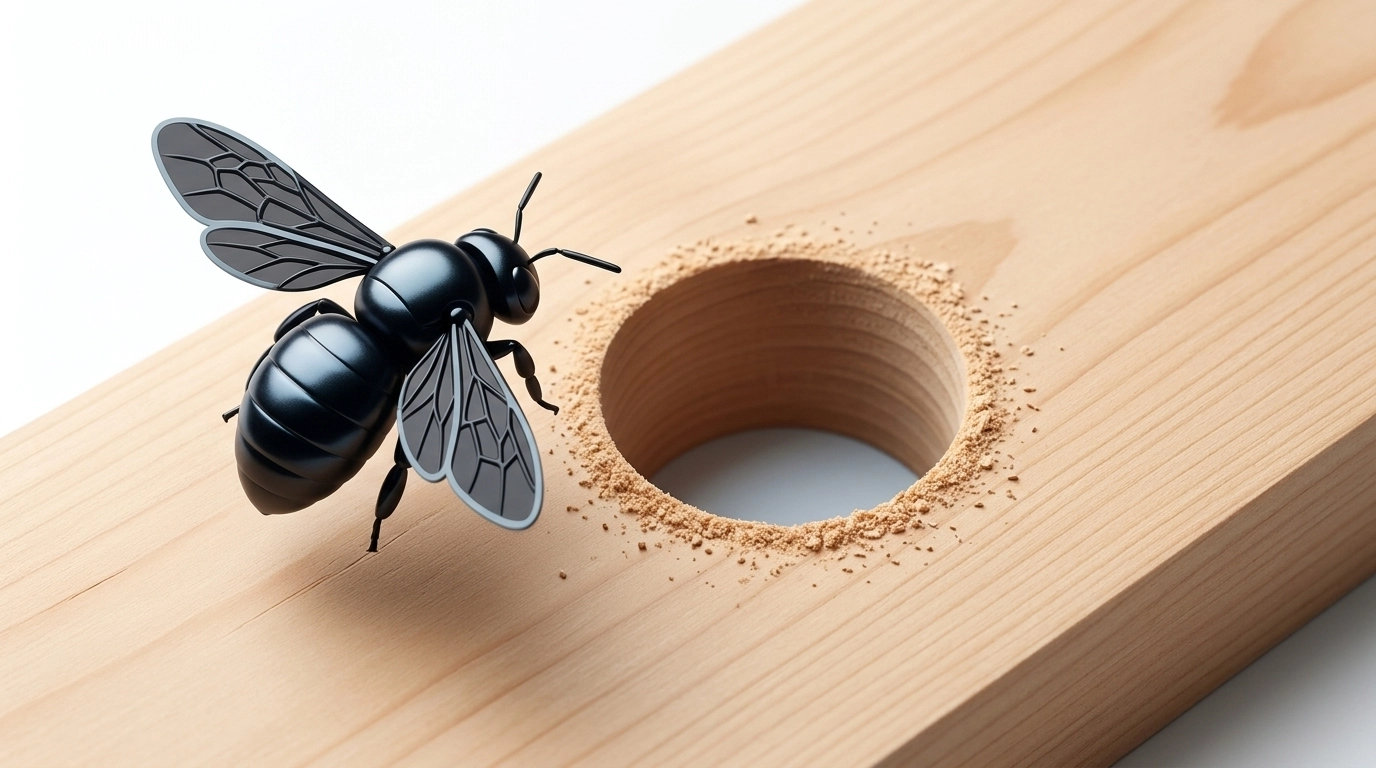 Note: Proper repair involves more than just a quick fix; it requires sealing the entry entirely.
Why Choose Great American Pest Solutions?
At Great American Pest Solutions, we don't just "spray and pray." We are a biologist-led team. This means we understand the life cycles, pheromones, and behaviors of the pests we fight.
When you look for pest control near me, you want someone who understands that your home is your biggest investment. Whether it's wasp control, termite protection, or stopping those drilling bees, we provide long-term prevention strategies that give you peace of mind.
Don't let your home become a honeycomb. Give us a call, and let’s get those bees moving along.
Technical Details & Transparency:
- Service Area: Metro Atlanta, GA
- Expertise: Biologist-Led Pest Management
- Ray ID: 7e8a9b2c1d0f3a4b
- IP Address: 192.168.1.1 (Internal Reference)
- Status: Resolved