
If you have tried to step out into your Georgia backyard for a midday grill-out only to be chased back inside by a swarm of tiny, black-and-white attackers, you have already met the Asian Tiger Mosquito (Aedes albopictus).
This isn't your average mosquito that waits for sunset to start its shift. The Asian Tiger is an aggressive, persistent daytime hunter that has effectively changed how Georgians spend time outdoors. At Great American Pest Solutions, we see the impact of this pest every single day. They are not just a nuisance; they are a highly adaptable invasive species that requires a specific strategy to control.
What is the Asian Tiger Mosquito?
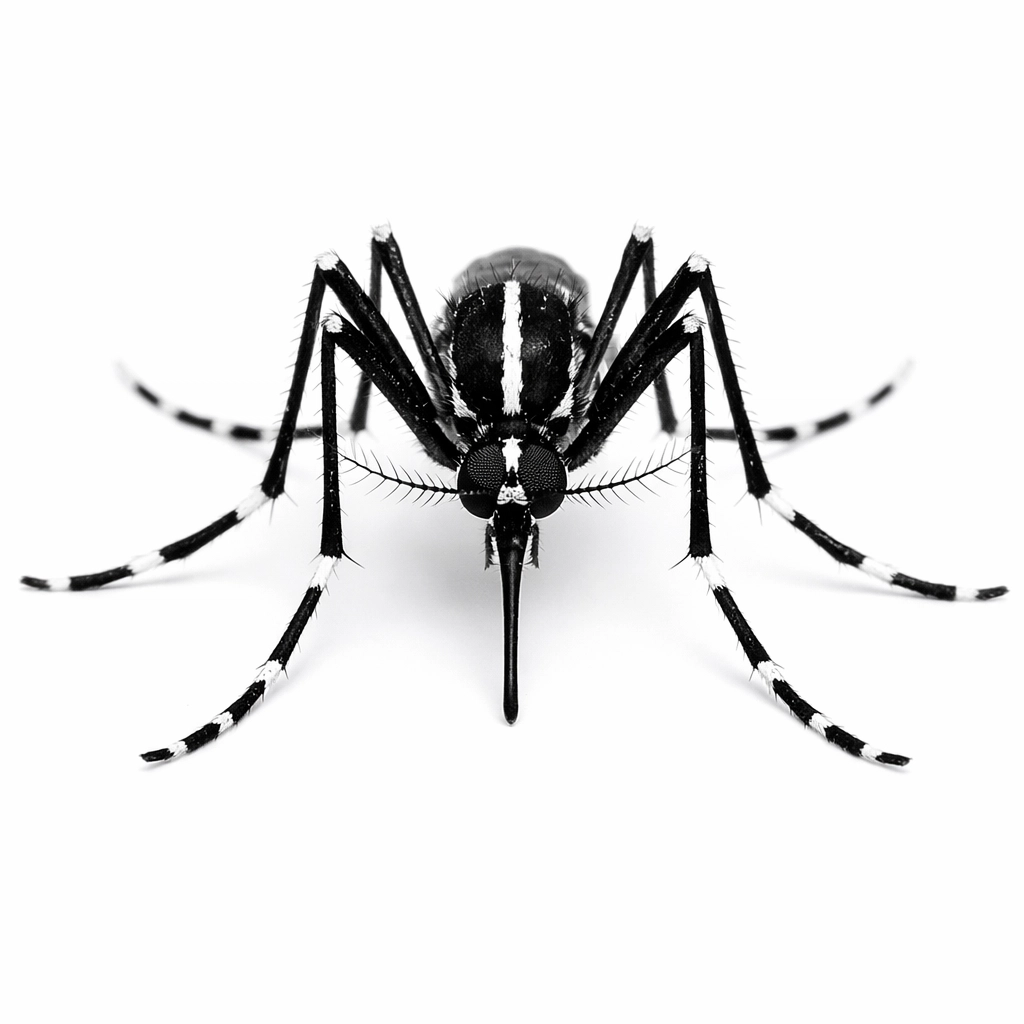
The Asian Tiger Mosquito is easily identified if you can get a close enough look before it bites. It is characterized by a jet-black body with stark, bright white stripes. The most defining feature is a single white stripe running down the center of its head and back, along with white "bands" on its legs.
Unlike many native species that are larger and brown, the Asian Tiger is smaller, faster, and much more aggressive. It earned its name from these stripes and its predatory nature.
Why is this mosquito so aggressive?
Most mosquitoes are "crepuscular," meaning they are most active during the low-light hours of dawn and dusk. The Asian Tiger Mosquito ignores this schedule. It is a daytime biter.
- Peak Activity: You will notice them most in the early morning and late afternoon, but they will bite all day if the area is shaded.
- Persistent Hunting: They are known to follow people. If you move from your porch to your garage, they will follow you. They have even been known to follow hosts into homes and vehicles.
- Feeding Habits: While they prefer human blood, they are opportunistic. They will readily feed on pets, livestock, and wild animals, which allows their populations to explode even in areas where people aren't present.
How did they get to Georgia?
The Asian Tiger Mosquito is an invasive species. It didn't start in the American Southeast. It was first discovered in the United States in 1985 in Houston, Texas, likely arriving in shipments of used tires from Asia.
By August 1986, it had made its way to Georgia. It found the Georgia climate to be a perfect match for its native habitat. By 1993, the species had successfully spread to every single county in the state. Today, it is the most common mosquito in Georgia, particularly in the northern regions and the metro Atlanta area.
What are the health risks?
A bite from an Asian Tiger Mosquito is itchy and annoying, but the primary concern is the potential for disease transmission. Because they feed on a variety of hosts and bite frequently, they are highly effective vectors (carriers) for several serious illnesses.
- Eastern Equine Encephalitis (EEE): A rare but serious viral disease that causes inflammation of the brain.
- West Nile Virus: The most common mosquito-borne disease in the continental United States.
- Zika Virus: Though outbreaks are less common now, this species is a primary carrier.
- Heartworm: This is a major threat to Georgia pet owners. These mosquitoes transmit heartworm larvae to dogs and cats, which can be fatal if not treated.
- Dengue and Chikungunya: While less common in Georgia, these viruses are frequently carried by Aedes albopictus in tropical climates and remain a monitored threat.
Where are they breeding in your yard?
One reason this mosquito is so hard to get rid of is its breeding habits. They are "container breeders." They do not need a pond or a lake to lay eggs. In fact, they prefer small, man-made containers.
A female Asian Tiger Mosquito only needs about a bottle cap's worth of water to lay her eggs. Once the eggs are laid, they are incredibly resilient. They can survive drying out and will hatch as soon as the container fills with water again.
Common breeding sites we find during our pest control inspections in Acworth and Atlanta include:
- Clogged Gutters: Leaves and debris trap water, creating a perfect elevated nursery.
- Plant Saucers: The small pool of water under your potted plants is a prime target.
- Corrugated Drain Pipes: The ridges in flexible black drain pipes hold water indefinitely.
- Old Tires: These are the "gold standard" for mosquito breeding because they insulate the water and stay dark.
- Yard Debris: Upturned toys, buckets, tarps, and even discarded bottle caps.

How can you stop the "Striped Strikers"?
Effective mosquito control requires a two-pronged approach: source reduction (DIY) and professional treatment.
Step 1: Source Reduction (The "Tip and Toss")
The most effective thing you can do as a homeowner is to eliminate standing water. You should walk your property at least once a week, especially after a Georgia rainstorm.
- Tip: Empty any containers holding water.
- Toss: Get rid of trash or items that aren't being used that could collect water.
- Maintain: Clean out your gutters and ensure birdbaths are scrubbed and refilled frequently.
- Thin the Foliage: Asian Tiger Mosquitoes love to rest in heavy vegetation during the heat of the day. Keeping your grass cut short and your bushes trimmed reduces their resting areas.
Step 2: Professional Treatment
Even if your yard is bone-dry, these mosquitoes can fly in from a neighbor's yard. They typically stay within 300 feet of their hatching site, but that is more than enough distance to cover several suburban backyards.
This is where Great American Pest Solutions comes in. Our professional mosquito treatments focus on the areas where these "tigers" live and hide.

Our process includes:
- Site Evaluation: We identify breeding "hotspots" that you might have missed.
- Barrier Sprays: We use specialized equipment to apply a treatment to the underside of leaves and deep into shrubs where mosquitoes rest.
- Larvicides: For areas of standing water that cannot be drained (like retention ponds or heavy drainage areas), we use professional-grade larvicides that stop the mosquitoes before they ever become biting adults.
Why DIY "Misting" Kits Often Fail
Many homeowners try to use store-bought foggers or "natural" sprays. While these might provide relief for an hour or two, they rarely have the residual power to handle the Asian Tiger Mosquito. These mosquitoes are hardy. They require professional-grade products that can withstand the Georgia heat and humidity to remain effective for 21 to 30 days.
Furthermore, a professional knows where to spray. Blasting the air doesn't do much. You have to hit the "resting sites": the foliage and shaded areas where these mosquitoes congregate when they aren't actively biting you.

Take Back Your Backyard
You shouldn't have to choose between getting a tan and getting eaten alive. The Asian Tiger Mosquito is a formidable opponent, but it isn't invincible. By combining consistent yard maintenance with a professional treatment plan, you can significantly reduce the population on your property.
If you are tired of being the "Pest of the Week" for the local mosquito population, it is time to call in the experts. Whether you are in Brookhaven, Avondale Estates, or anywhere in the greater Atlanta area, we are here to help.
Ready to stop the stripes?
Contact Great American Pest Solutions today for a free estimate on our mosquito control services. Let's make your backyard a "No-Fly Zone" for the Asian Tiger.

More Resources:
- Check out our Reviews to see how we’ve helped your neighbors.
- Dealing with other seasonal pests? See our guides on Ants and Stinging Insects.
Technical Accountability:
- Location: Georgia, USA
- Service Category: Mosquito Control / Home Services
- Target Species: Aedes albopictus