
If you have stepped outside on a warm, humid morning in Atlanta lately and noticed a cloud of small, dark, winged insects hovering near your porch or windowsills, you are witnessing one of nature’s most expensive events. Termite swarm season in Georgia is officially underway. For homeowners, this isn't just a seasonal quirk; it is a critical warning sign that your largest investment could be under internal attack.
In Georgia, the climate is essentially a "welcome" mat for termites. Our high humidity, mild winters, and abundant rainfall create the perfect environment for subterranean colonies to thrive. While these pests are active year-round, the spring "swarm" is the only time they truly make themselves visible to the naked eye.
Why are there flying bugs in my house?
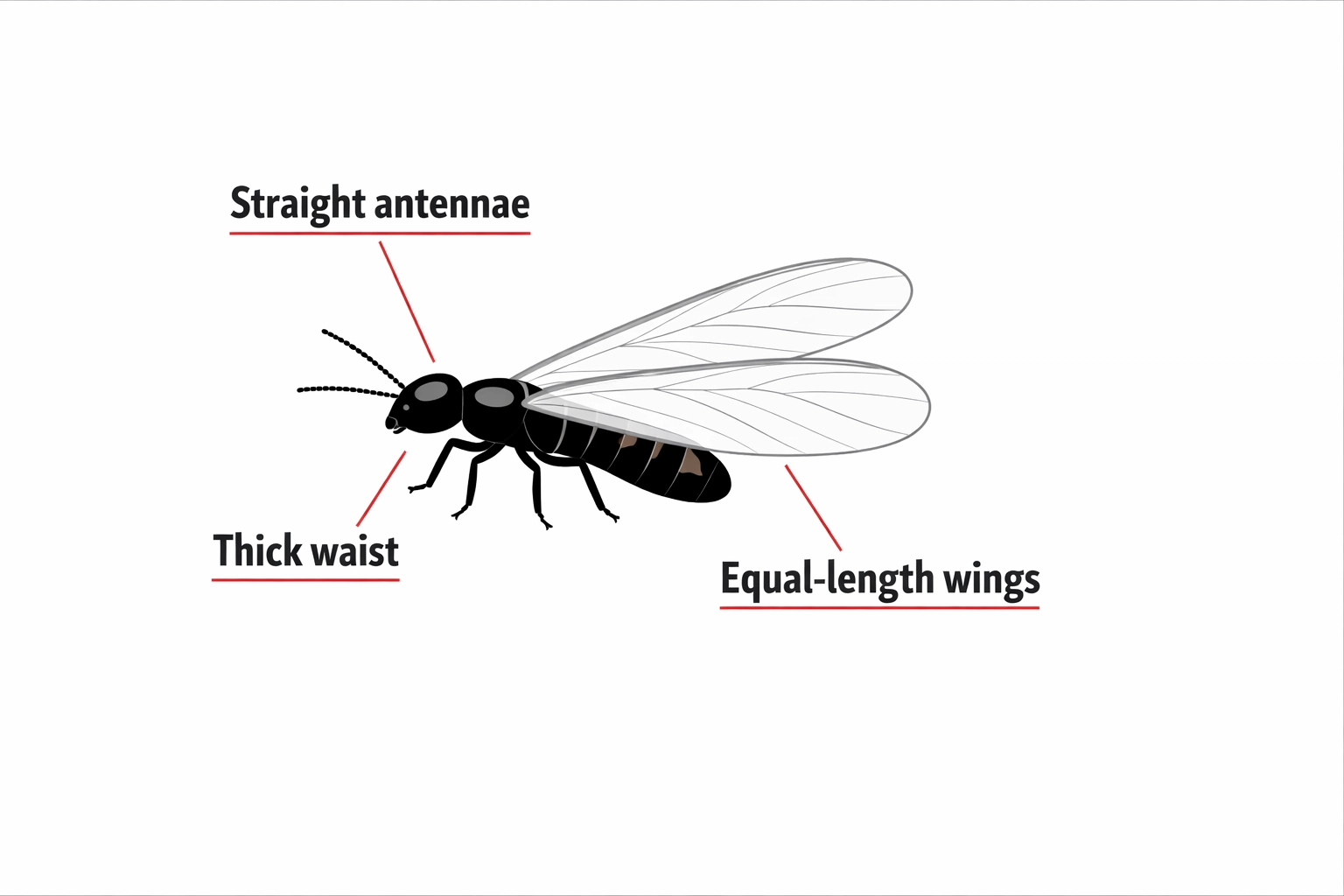
The sudden appearance of flying insects indoors is often the first: and sometimes only: obvious sign of a termite problem. These "swarmers" (scientifically known as alates) are the reproductive members of a mature termite colony.
Their primary goal: To leave the home colony, find a mate, and start a new colony.
When a colony reaches a certain size and maturity (usually after three to five years), it produces these winged reproductives. They are triggered by specific weather conditions to take flight, usually following a spring rain when the air is warm and the ground is moist. If you see them inside your home, it almost certainly means there is a mature colony living within or directly underneath your foundation.
When is termite season in Georgia?
In Georgia, termite activity follows a fairly predictable schedule based on the species and the local weather. Because our state has a subtropical climate, the window for swarming is wider than in northern states.
- Most likely: Eastern Subterranean Termites. These are the most common culprits in the Atlanta area. They typically swarm from February through May. You will see them during the daylight hours, often on the first warm day (above 70°F) following a rainstorm.
- Less likely (but more aggressive): Formosan Termites. These are primarily found in the southern parts of the state but have been moving north toward the metro Atlanta area. They swarm later, usually from April through June, and unlike their cousins, they prefer to swarm at night, often congregating around porch lights or street lamps.
Even after the "swarming" stops, the threat does not. The workers: the ones that actually eat your wood: remain active 24 hours a day, 365 days a year. Georgia's soil rarely freezes deep enough to stop them, meaning they are tunneling and feeding even during the winter months.
How do I tell the difference between termites and ants?
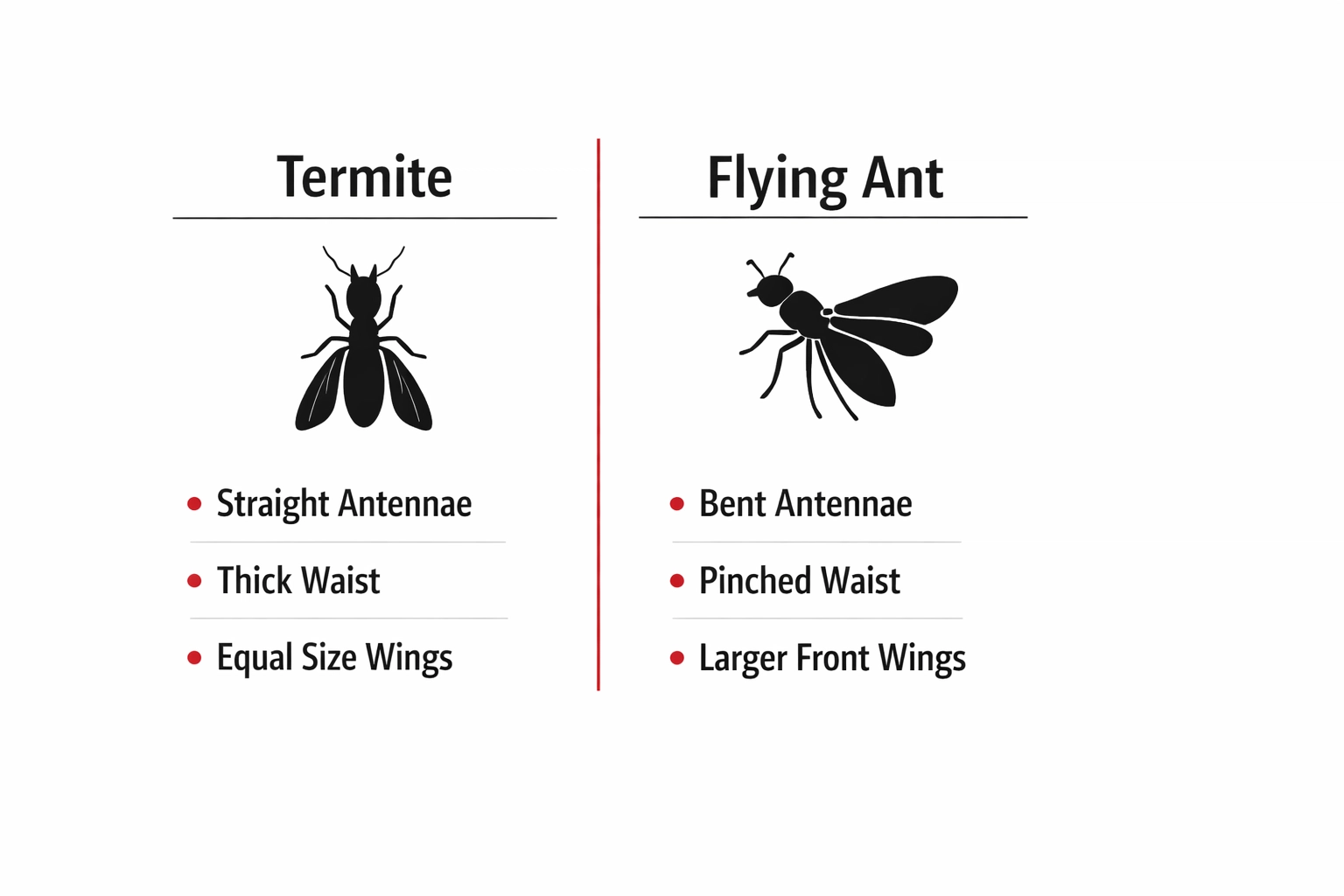
Misidentification is a common mistake that costs homeowners thousands of dollars in delayed treatment. Flying ants also swarm in the spring, and at a glance, they look remarkably similar to termite swarmers.
Key identifiers for Termites:
- Body shape: Termites have a "thick" waist. Their body is broadly joined between the thorax and abdomen without a narrow constriction.
- Antennae: Termite antennae are straight and look like tiny strings of beads.
- Wings: Termites have four wings of equal length. These wings are typically twice as long as the insect’s body and are shed shortly after flight.
Key identifiers for Ants:
- Body shape: Ants have a very distinct, "pinched" or narrow waist (like an hourglass).
- Antennae: Ant antennae are elbowed or bent at an angle.
- Wings: Ant wings are unequal in length. The front pair is significantly longer than the back pair.
What are the signs of an infestation?
If you miss the actual swarm, there are other technical indicators that a colony has moved in. You should perform a walk-around of your home’s exterior and crawlspace at least once every three months.
- Discarded Wings: After swarmers find a mate, they intentionally twist off their wings. You might find small piles of translucent wings on windowsills, in spider webs, or near entry points like doors.
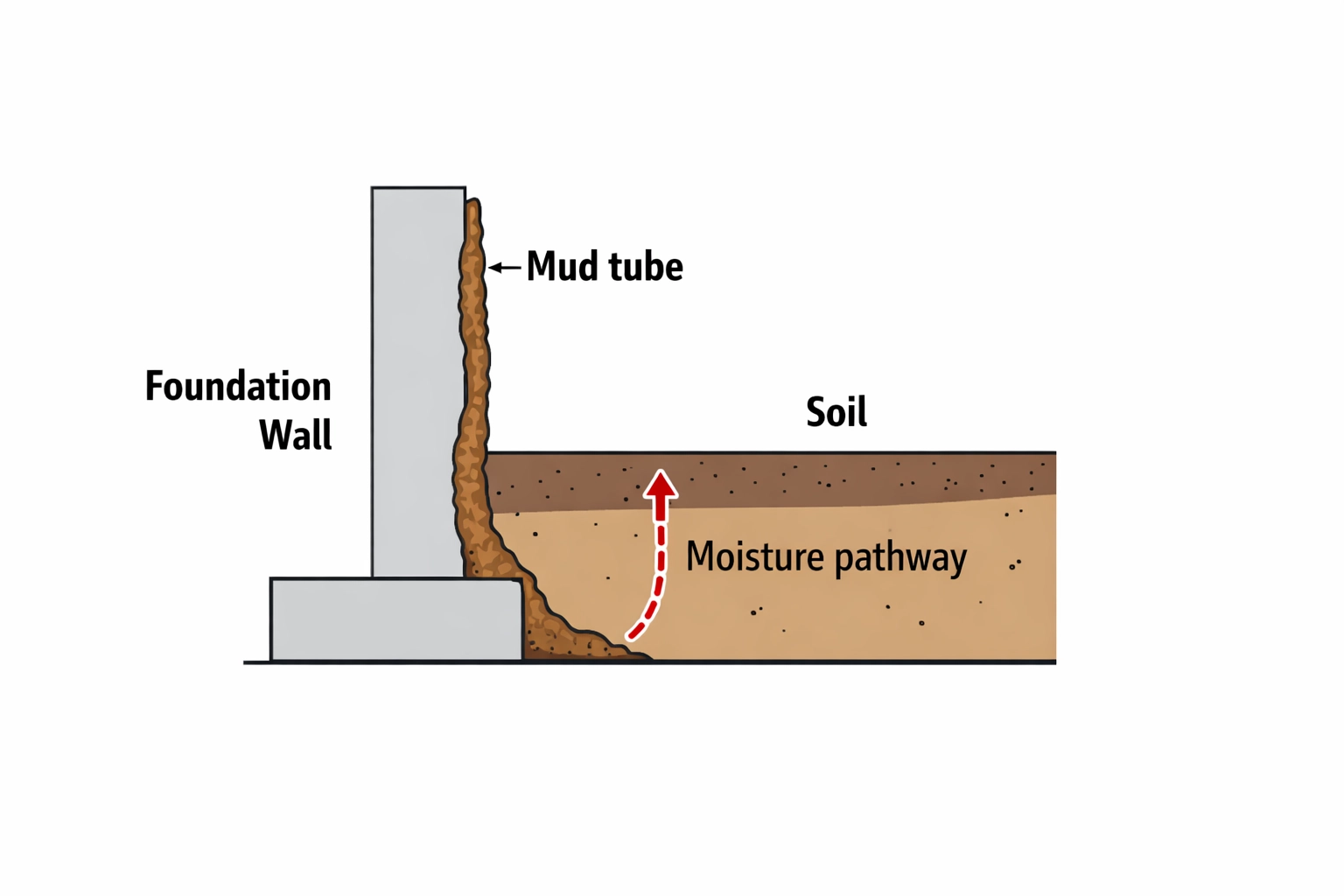
- Mud Tubes: Subterranean termites require moisture to survive. To travel from the soil to the wood in your home without drying out, they build "mud tubes": pencil-thin tunnels made of soil and saliva. Look for these on your foundation walls, in crawlspaces, or climbing up support piers.
- Hollow-Sounding Wood: Termites eat wood from the inside out, often leaving a thin veneer of paint or wood on the exterior. If you tap on a baseboard or door frame and it sounds hollow or papery, you may have significant damage.
- Frass (Termite Droppings): While more common with drywood termites (which are less common in Georgia than subterranean ones), small piles of wood-colored pellets can indicate an active infestation.
Why is Georgia a high-risk zone?
The Southeast is classified by the Department of Housing and Urban Development (HUD) as "Region 1," which represents the highest level of termite activity in the United States. In Georgia, it is often said that there are two types of homes: those that have termites and those that will have termites.
Our clay-heavy soil retains moisture exceptionally well, providing the perfect subterranean highway for colonies to navigate. Furthermore, the modern construction of many Atlanta-area homes: using crawlspaces or concrete slabs with utility penetrations: provides numerous hidden entry points that go unnoticed for years.
How can I protect my home?
Effective termite control requires a dual approach: reducing the factors that attract them and maintaining a professional termite treatment barrier.
Immediate Prevention Steps:
- Eliminate Wood-to-Soil Contact: Ensure there is at least a six-inch gap between the soil and any wood siding or trim on your home. This includes decks and fence posts.
- Manage Moisture: Fix leaky outdoor faucets and ensure your gutters are clear. Downspouts should carry water at least three feet away from the foundation. Termites are attracted to wet soil.
- Clear Debris: Do not store firewood, mulch, or cardboard boxes against the foundation of your home.
- Ventilate Crawlspaces: High humidity in a crawlspace is an open invitation for a colony. Consider a vapor barrier or dehumidification system if your crawlspace feels damp.
What are the professional treatment options?
When it comes to termites, "Do It Yourself" (DIY) is rarely effective. Household sprays only kill the termites you see (the swarmers), but they do absolutely nothing to stop the thousands of workers hidden behind your walls or the queen deep in the ground.
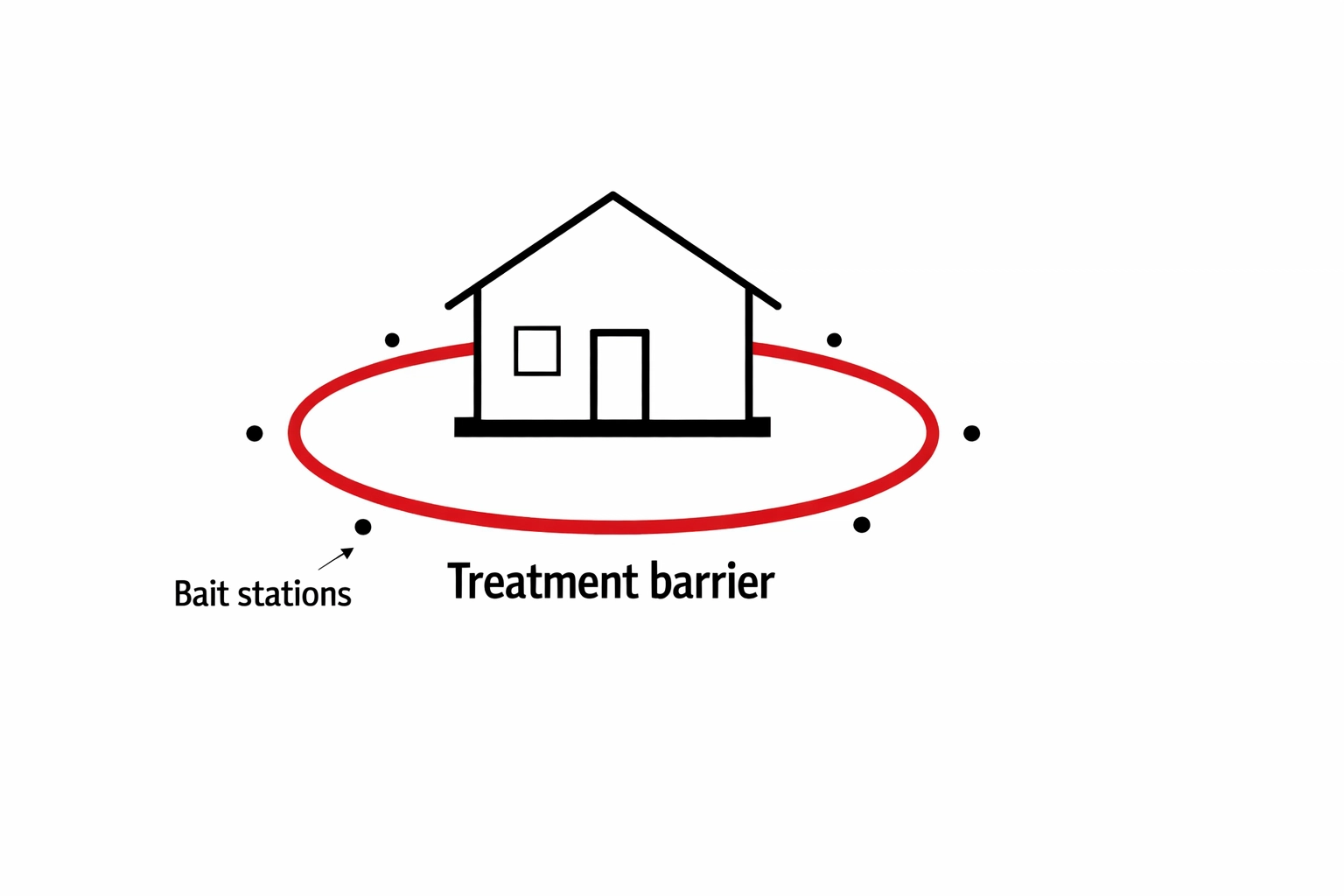
Professional termite treatment typically involves one of two industry-standard methods:
- Liquid Soil Barriers: A liquid termiticide is applied to the soil around the entire perimeter of the home. Termites that pass through this "trench" are eliminated, preventing them from entering the structure.
- Baiting Systems: Strategically placed stations are installed around the home containing a bait that termites prefer over wood. The termites take the bait back to the colony, eventually eliminating the entire population, including the queen.
At Great American Pest Solutions, we understand that every home in the Atlanta area has a unique footprint. We evaluate the construction of your home and the specific pressure of the surrounding environment to determine which method offers the best long-term security.
Is your home actually protected?
Many homeowners assume that because they have a "termite letter" from when they bought the house, they are protected. This is a dangerous misconception. A termite letter is simply a snapshot of that specific day; it does not provide ongoing protection.
If your home has not been professionally inspected in the last year, or if your previous termite bond has expired, your home is essentially an unprotected target. Given the speed at which subterranean termites can cause structural damage, waiting until you see a swarm is often waiting too long.

Take the next step
Don’t wait for the swarm to find you. Protecting your home from termites is a matter of proactive maintenance rather than reactive repair. If you are concerned about activity around your property or simply want to ensure your current protection is up to date, reach out for a professional evaluation.
For more information on keeping your property pest-free, visit our blog or check our Service Area for specific service areas in Georgia.
Contact Great American Pest Solutions today to schedule your comprehensive termite inspection and secure the peace of mind you deserve.